06/17/2026
Continuous Formed Winding (CFW): shaping the future of stator manufacturing
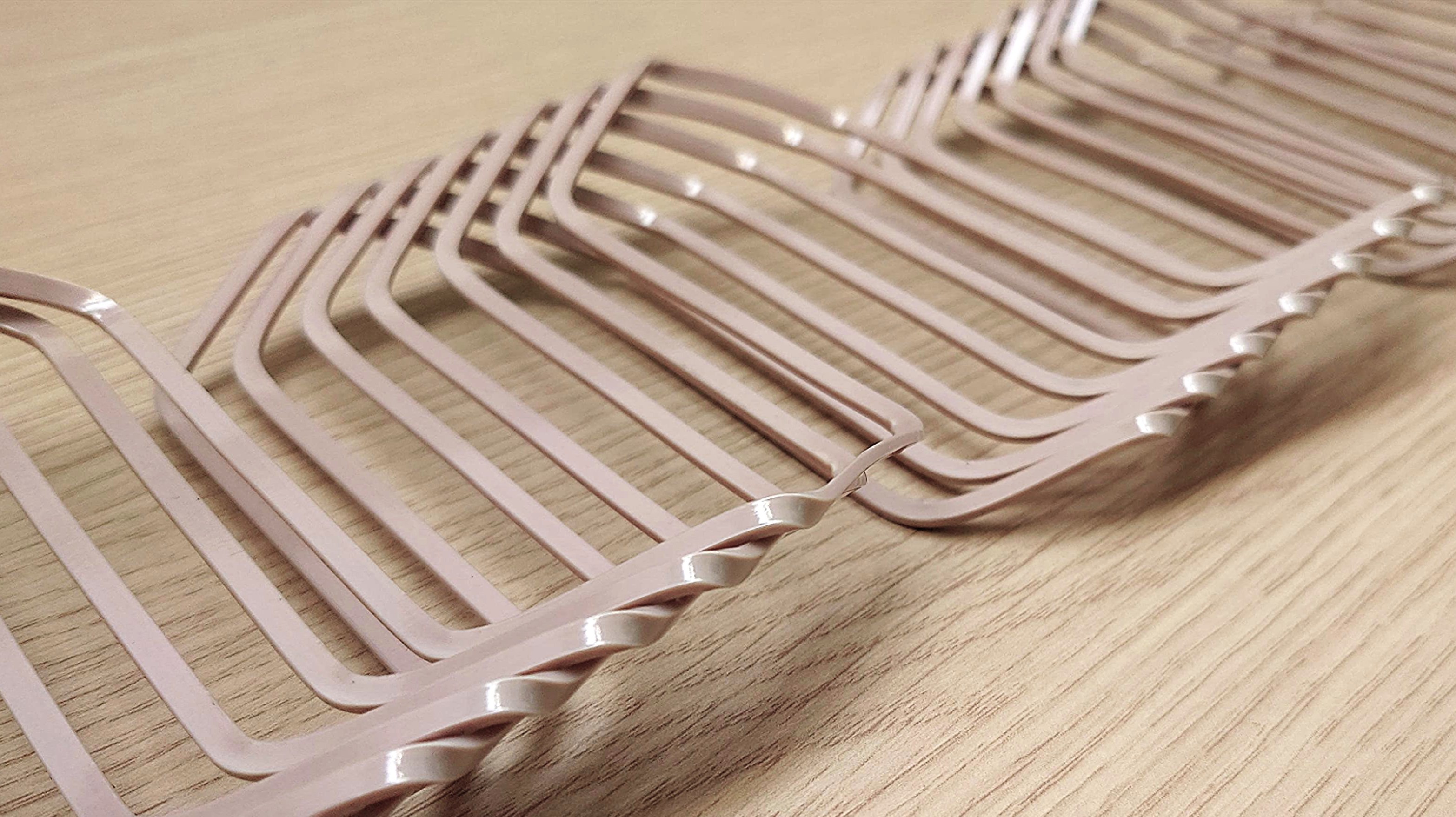
The development of radial flux electric traction motors is increasingly focusing on two key winding technologies: Flat Wire Wave Winding and Hairpin Winding. Each approach offers distinct advantages, but also presents specific limitations pushing the industry to explore new solutions capable of improving both product performance and manufacturing efficiency.
Flat Wire Wave Winding stands out for its ability to significantly reduce the number of welds required in the stator, delivering potential benefits in terms of electrical performance and reliability.
However, these advantages come with trade-offs. The process involves managing long, interlaced conductors, making assembly less controlled and more complex. Additionally, insertion often relies on plastic deformation of the wire, which can lead to material stress and production scrap. From a manufacturing standpoint, the technology typically requires large-scale equipment and considerable factory space, impacting overall production efficiency.
In contrast, Hairpin Winding is based on the assembly of individual pre-formed pins, resulting in a highly stable and repeatable manufacturing process. This makes it particularly suitable for industrial environments where consistency and quality control are essential.
That said, the high number of welds required introduces potential risks and process challenges. Despite this, Hairpin technology remains simpler to manage than wave insertion methods and offers strong advantages in terms of flexibility, scalability, and automation readiness.
CFW Technology: Combining the best of Flat Wire Wave Winding and Hairpin Winding
To address the limitations of both technologies, IMA AUTOMATION is developing an innovative solution: the CFW (Continuous Formed Winding) concept. This approach aims to combine the strengths of Flat Wire Wave Winding and Hairpin Winding into a unified, optimized process.
The concept is based on assembling smaller wave elements that can be produced and handled similarly to hairpins. This hybrid approach improves process control while maintaining the performance benefits of continuous winding.
A key feature of the CFW concept is external insertion, which significantly simplifies full automation and minimizes the need for plastic deformation during the assembly process. The result is a more efficient, scalable, and controlled manufacturing solution.
As demand for high-performance electric motors grows, integrating and evolving existing technologies is becoming increasingly important. Solutions such as CFW demonstrate how combining different approaches can overcome current limitations, enabling more efficient and scalable stator manufacturing for the next generation of electric traction systems.
Interested in learning more about CFW technology and its potential for your applications? Get in touch with our team.
Check
latest news

Get in touch
